Loading...
ERP for E-commerce
Unified E-commerce ERP Software for Multi-Channel Online Stores
Stop reconciling stock between your store and your warehouse by hand. Infintrix ERP connects WooCommerce, Shopify, and marketplace orders directly to ERPNext, so inventory, orders, and finance stay in sync in real time.

Illustrative screens, sample data.
Companies we have delivered for





Why Infintrix
Why Choose Infintrix ERP for E-commerce?
Infintrix ERP is built for the pace of online selling — SKUs that move fast, orders that arrive from multiple channels, and stock levels that need to be accurate to the minute, not the day.
Our e-commerce ERP software connects your storefront, warehouse, and accounting, including direct WooCommerce and marketplace integration, so what's shown online always matches what's actually in stock.
Store-Synced Inventory
Keep stock levels accurate across WooCommerce, Shopify, and marketplaces automatically.
Scalable Solutions
From a single storefront to a multi-channel brand, our ERP scales with your order volume.
Order-to-Cash Automation
Automate order fulfillment, invoicing, and payment reconciliation end to end.
Case study
Redragon E-Commerce Pakistan
We connected Redragon's online storefront with ERPNext to centralize inventory, order fulfillment, and payment tracking across channels.
Benefits
Benefits of ERP Software for E-commerce
See how our ERP software eliminates manual reconciliation and keeps inventory, orders, and finance in sync for online sellers.
Centralized Order Management
Bring orders from every channel into one **ERP dashboard** instead of juggling separate store back-ends.
Real-Time Inventory Sync
Avoid overselling and out-of-stock issues with stock levels synced across every sales channel.
Automated Order Fulfillment
Cut manual effort by automating order processing, packing lists, and shipment updates.
Multi-Channel Sales Management
Manage WooCommerce, Shopify, marketplaces, and your physical store from a single system.
Financial Reconciliation
Match payment gateway settlements to orders automatically, instead of manual spreadsheet reconciliation.
Returns & Exchange Management
Process returns and restocks consistently across every sales channel.
In practice
How ERP Enhances E-commerce Business Operations
Our ERP software connects your storefronts, warehouse, and finance for e-commerce brands on one unified platform.
- WooCommerce & Marketplace Integration
- Sync stock, orders, and payments in real time between ERPNext and every store you sell on.
- Warehouse & Fulfillment Management
- Pick, pack, and ship accurately with real-time stock visibility across locations.
- Payment Gateway Reconciliation
- Automatically match settlements from payment gateways to orders and invoices.
- Advanced Analytics & Reporting
- Track best-sellers, channel performance, and margins through real-time dashboards.
Capabilities
Key Features of Our ERP Software for E-commerce
Discover essential ERP modules designed to streamline e-commerce operations, from the storefront to the warehouse.
WooCommerce & Shopify Integration
Keep stock and pricing consistent across every storefront you operate.
Multi-Channel Order Management
Process orders from your website, marketplaces, and physical store in one pipeline.
Real-Time Inventory Management
Track stock across SKUs and warehouses with accuracy to avoid overselling.
Warehouse & Fulfillment
Manage picking, packing, and shipping with real-time stock visibility.
Returns & Exchange Management
Handle customer returns consistently across every sales channel.
Financial Integration
Connect sales data directly to accounting for accurate margin tracking.
Payment Gateway Reconciliation
Automatically match gateway settlements to orders and invoices.
Sales & Order Management
Simplify order processing, invoicing, and shipment tracking end to end.
Customer Relationship Management (CRM)
Track customer interactions and repeat purchase behavior to grow retention.
Procurement & Vendor Management
Automate purchase orders and supplier tracking for restocking.
Document Control System
Securely manage supplier contracts, invoices, and compliance documentation.
Analytics & Business Intelligence
Gain real-time insights with customizable dashboards across every channel.
Modules
ERP Modules Tailored for E-commerce
Our modular system lets you customize your ERP with features designed specifically for online and multi-channel sellers:
- WooCommerce & Shopify Integration
- Multi-Channel Order Management
- Real-Time Inventory Sync
- Warehouse & Fulfillment
- Payment Gateway Reconciliation
- Returns & Exchange Management
- CRM & Customer Retention
- Procurement & Vendor Management
- Financial Management
- Analytics & Business Intelligence
Common challenges
Challenges Faced by E-commerce Businesses
See how ERP tackles challenges like overselling, disconnected channels, and manual reconciliation in online retail.
Overselling Across Channels
How we address it: Sync inventory in real time across every storefront so stock never goes negative.
Disconnected Sales Channels
How we address it: Manage WooCommerce, Shopify, marketplaces, and in-store sales from one system.
Manual Payment Reconciliation
How we address it: Automatically match payment gateway settlements to orders and invoices.
Slow Order Fulfillment
How we address it: Automate picking, packing, and shipment updates to speed up delivery times.
Inconsistent Returns Handling
How we address it: Standardize returns and restocking across every channel you sell on.
Scaling to New Channels
How we address it: Add new marketplaces or storefronts without losing centralized inventory control.
Deployment
Cloud Deployment for E-commerce ERP
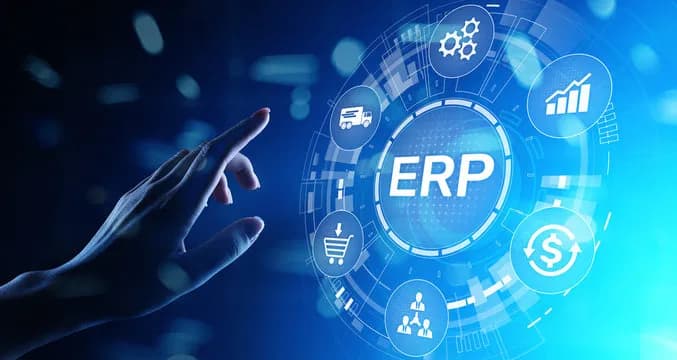
Access your business anytime, anywhere, whether you're at the warehouse or managing a flash sale from your phone. Our **cloud ERP** offers you:
- Anywhere Access
- Empower remote teams and multi-warehouse operations with secure, browser-based ERP access.
- Flexible Scalability
- Easily add channels, users, or modules as your order volume grows.
- Secure Cloud Storage
- Protect customer, order, and payment data with encrypted cloud backups.
FAQ
Frequently asked questions
Straight answers to what clients ask us before they start.
What is ERP software for e-commerce businesses?
It's a centralized platform that connects your online storefronts, warehouse, and finance so inventory and orders stay accurate across every channel.
Can the ERP integrate with WooCommerce and Shopify?
Yes. We've built real WooCommerce-to-ERPNext integrations that sync stock, orders, and payments in real time. See our case studies below.
Can ERP prevent overselling across multiple channels?
Yes, inventory is synced in real time across every storefront and marketplace, so stock levels stay accurate everywhere at once.
Is ERP suitable for small online stores and large multi-channel brands?
Absolutely. Our modular ERP is scalable and customizable, suitable for a single storefront or a multi-channel e-commerce operation.
Does the ERP handle returns and exchanges?
Yes, returns and restocking can be processed consistently across every channel you sell on.
Can ERP reconcile payment gateway settlements automatically?
Yes, our ERP matches payment gateway settlements to orders and invoices automatically, reducing manual reconciliation.
Is the ERP customizable to fit different e-commerce business models?
Yes, it can be tailored to D2C brands, wholesale-plus-retail hybrids, or pure marketplace sellers.
Can ERP provide real-time analytics across all sales channels?
Yes, our ERP dashboard delivers real-time insights into sales, inventory, and channel performance.